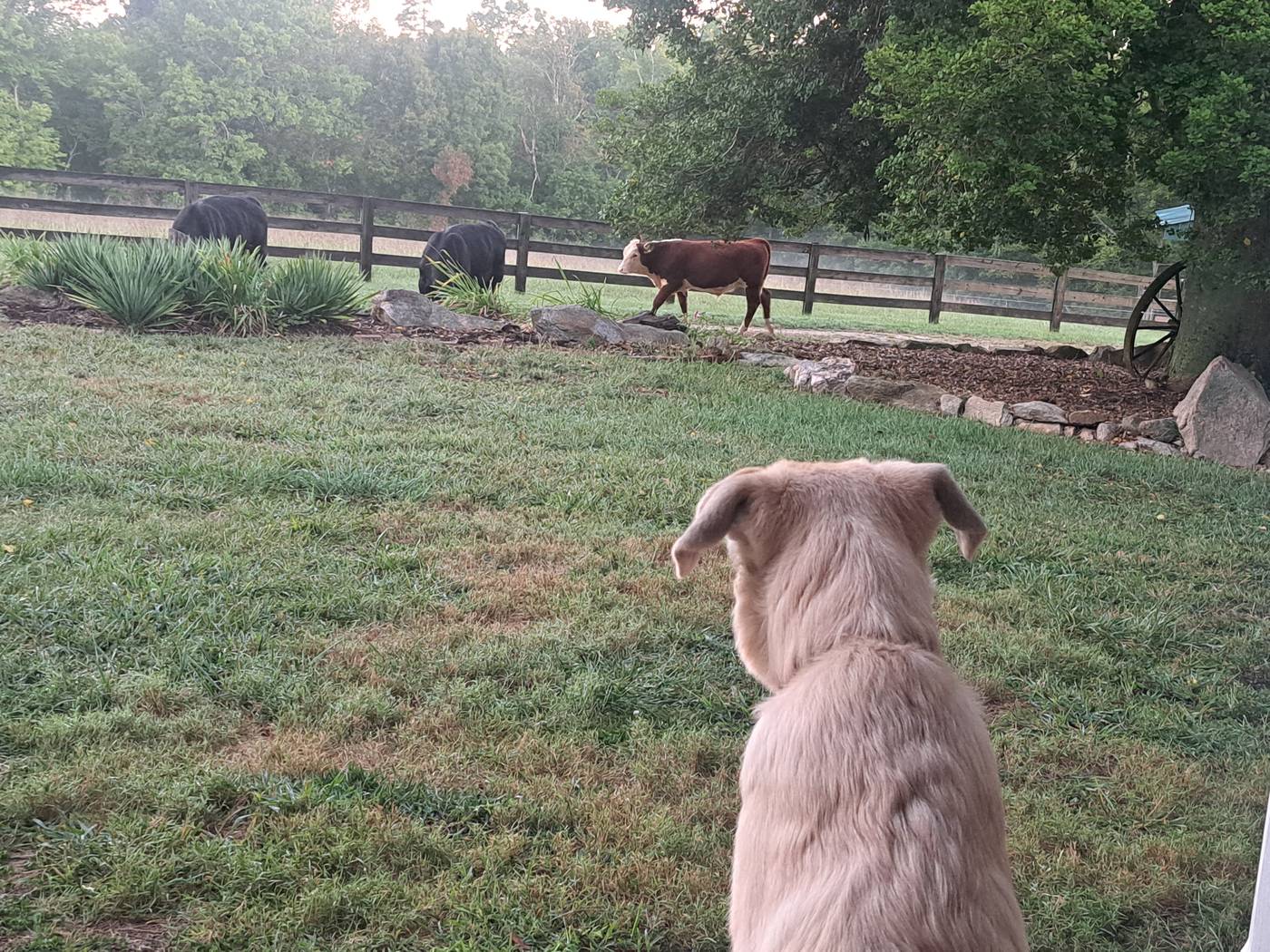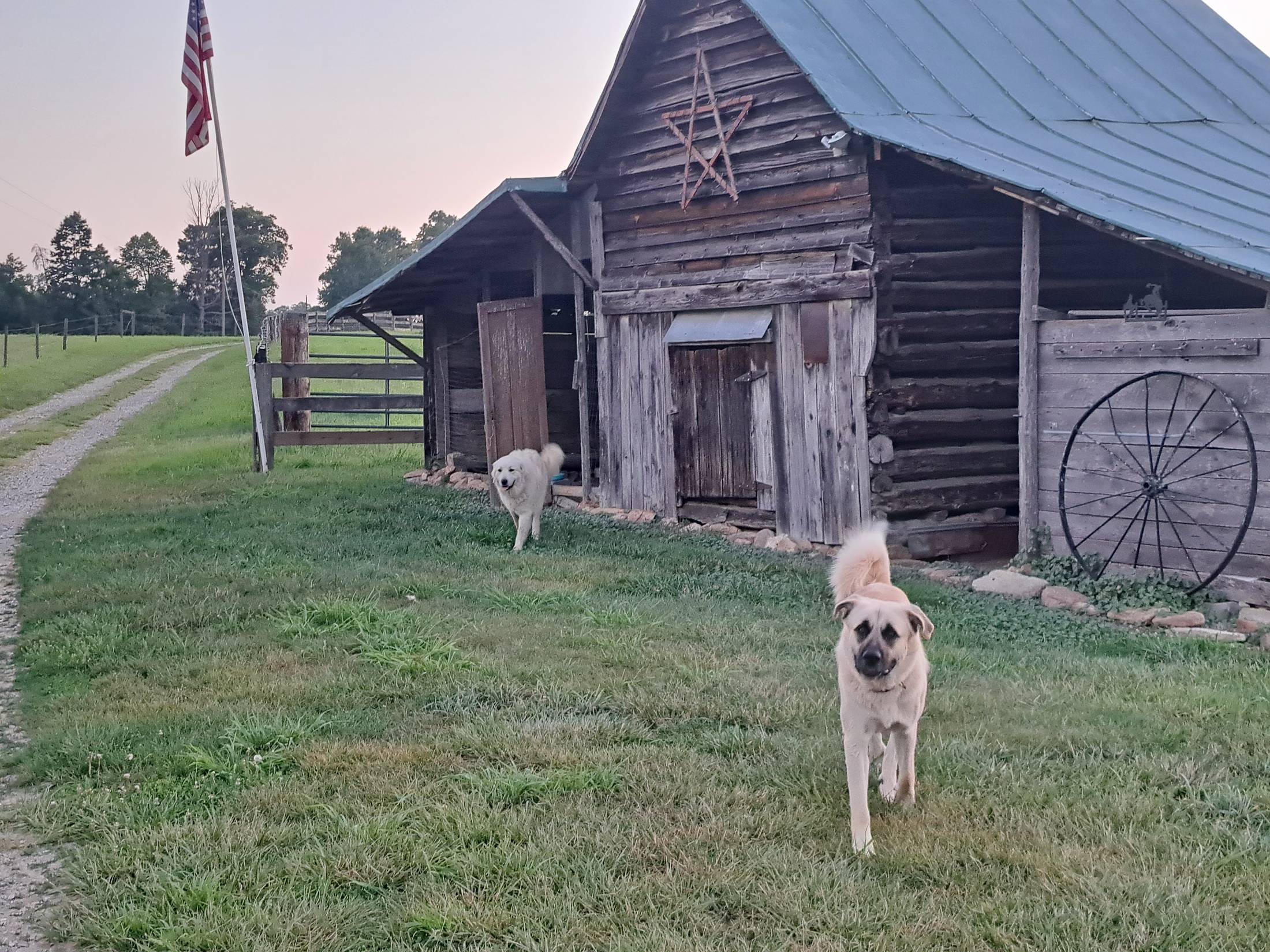
Every flock has a dog who watches the tree line long after everyone else has stopped looking. This is a story about one of them.
Buster was a sheep dog. That was a job, not a breed. For Buster, it was his life. Each morning he would know the farm by smell before he knew it by sight. There was the cold iron smell of the pump, the damp boards of the sheep shed, the sweet rot of fallen apples along the fence. There was the flock itself: wool, mud, and the warm grassy breath of forty sheep waking together. Beyond them lay the thin, sharp scents that did not belong — the fox that passed in the night, the bobcat down by the creek, the coyotes travelling along the tree line.
For twelve years, Buster had sorted one from another.
He was a big white dog, though age and red North Carolina clay had made the white more of an idea. His coat carried burrs in autumn and bits of hay in winter. One ear stood straight; the other had folded halfway over ever since a fight no one had seen. He slept in a doghouse set in the lean-to behind the barn, where he could hear the flock shifting in the dark.
The farmer had built the doghouse when Buster was young. He had made it larger than necessary and raised it on bricks to keep the floor dry. In January he put cedar shavings inside. In August Buster pushed them out. Mostly, Buster only used the doghouse on the coldest of nights.
"You could come in the house," the farmer would call to him on bad nights.
Buster would look past him toward the pasture, turn, and walk away.
Inside the house lived Pip, a brown dog weighing nine pounds after supper. It was the kind of dog you carried. Pip would go outside, attend to his business near the porch, and scratch to be let back in before anything could happen to him. Buster did not dislike Pip. Dislike would mean taking him seriously. In Buster's private judgment, Pip should not be called a dog. He was some other animal that happened to eat dog food. Pip, for his part, considered Buster uncivilized.
Between them, they had the farm covered.
Buster had kept away coyotes, bobcats, hawks, and once a young, curious black bear that came over the ridge in early spring. One morning the farmer had found bear tracks in the mud and Buster asleep beside the fence with blood drying on his shoulder. The sheep were untouched.
Only once had Buster failed.
He had torn a pad on a piece of roofing tin and could hardly put weight on the foot. The farmer shut him in the barn to heal. That night something slipped through a washed-out place beneath the far fence and took a lamb. By morning there was nothing left but a little torn wool on the briars.
The farmer never blamed him. Buster blamed himself enough for both of them. For years afterward, he checked that low place every evening, even after the farmer filled it with stone and drove two new posts. Some losses heal. Others become part of the path.
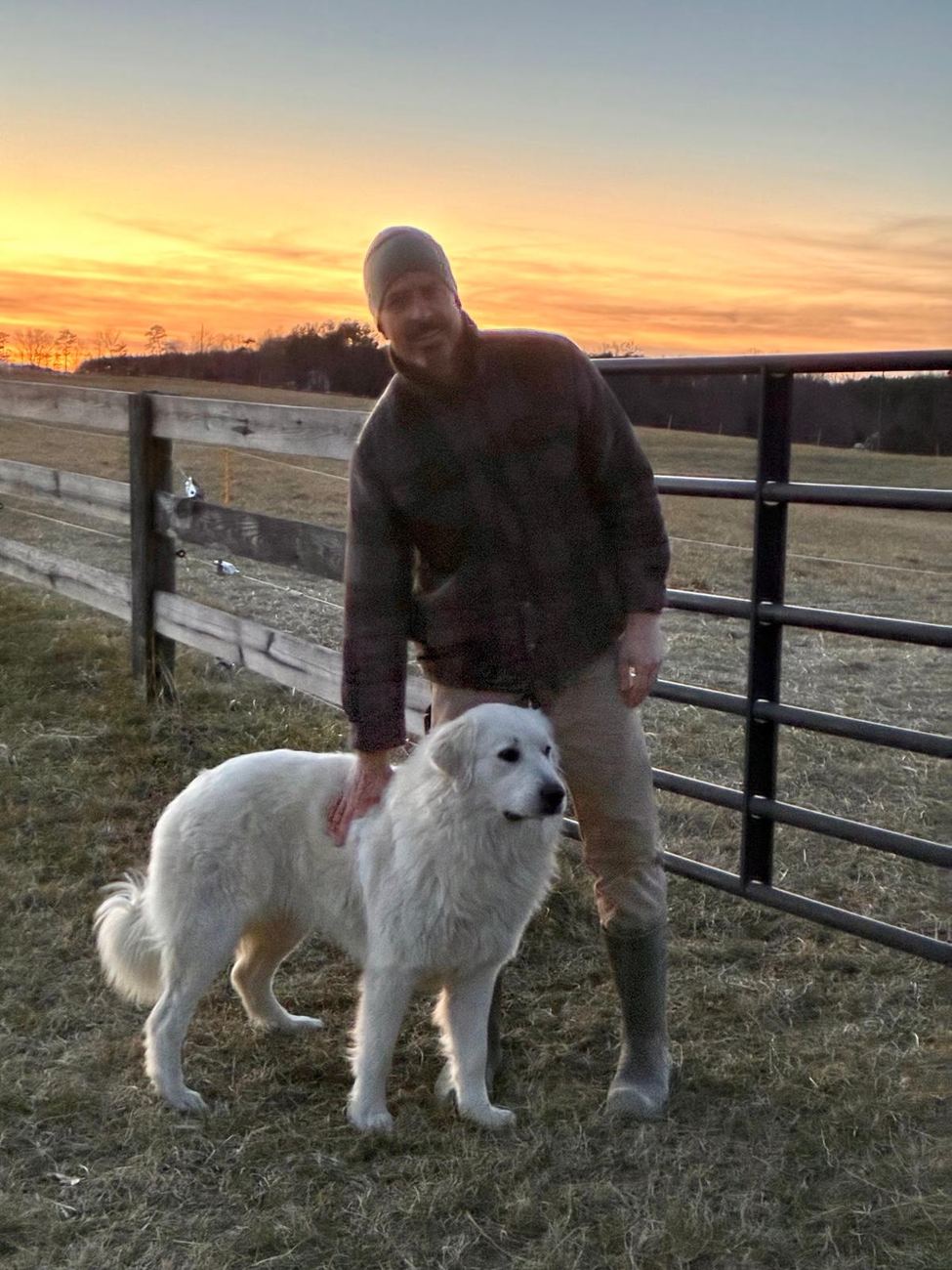
By the time Buster was thirteen, the path had grown longer. His hips hurt when he first stood. On cold mornings he waited until the farmer turned away before taking his first steps. Once he was moving, he could make the stiffness look like deliberation. He had always been a dog who conserved his effort, and age allowed him to pass pain off as dignity.
The farmer saw through it. Even he had begun carrying feed in smaller buckets because his own hands ached, and he recognized the tricks of the old.
"We're a pair, ain't we?" he said one morning.
Buster leaned his weight against the farmer's leg for the length of one breath, then walked on.
The coyote came in late March.
It was a lean male with a scar across its muzzle, bold enough to stand just outside the fence and look at Buster. The scent told Buster this was the leader, the pack most likely in the trees waiting for orders. Most coyotes understood the first warning. This one had tested him twice already, learning the limits of his speed.
Buster drove it back into the trees, but the coyote wheeled and sank its teeth into his shoulder before disappearing into the woods. The next morning the farmer found him limping, the wound hidden beneath the thick fur.
Three days later, a truck pulled into the yard and a young dog jumped out.
His name, according to the farmer, was Junior. He was not yet a year old, all legs and paws, with a black patch over one eye and the unfounded confidence of the very young. He introduced himself to Buster by bounding forward, dropping into a play bow, and barking directly into his face.
Buster looked first at the farmer, then turned and walked away.
Junior followed.
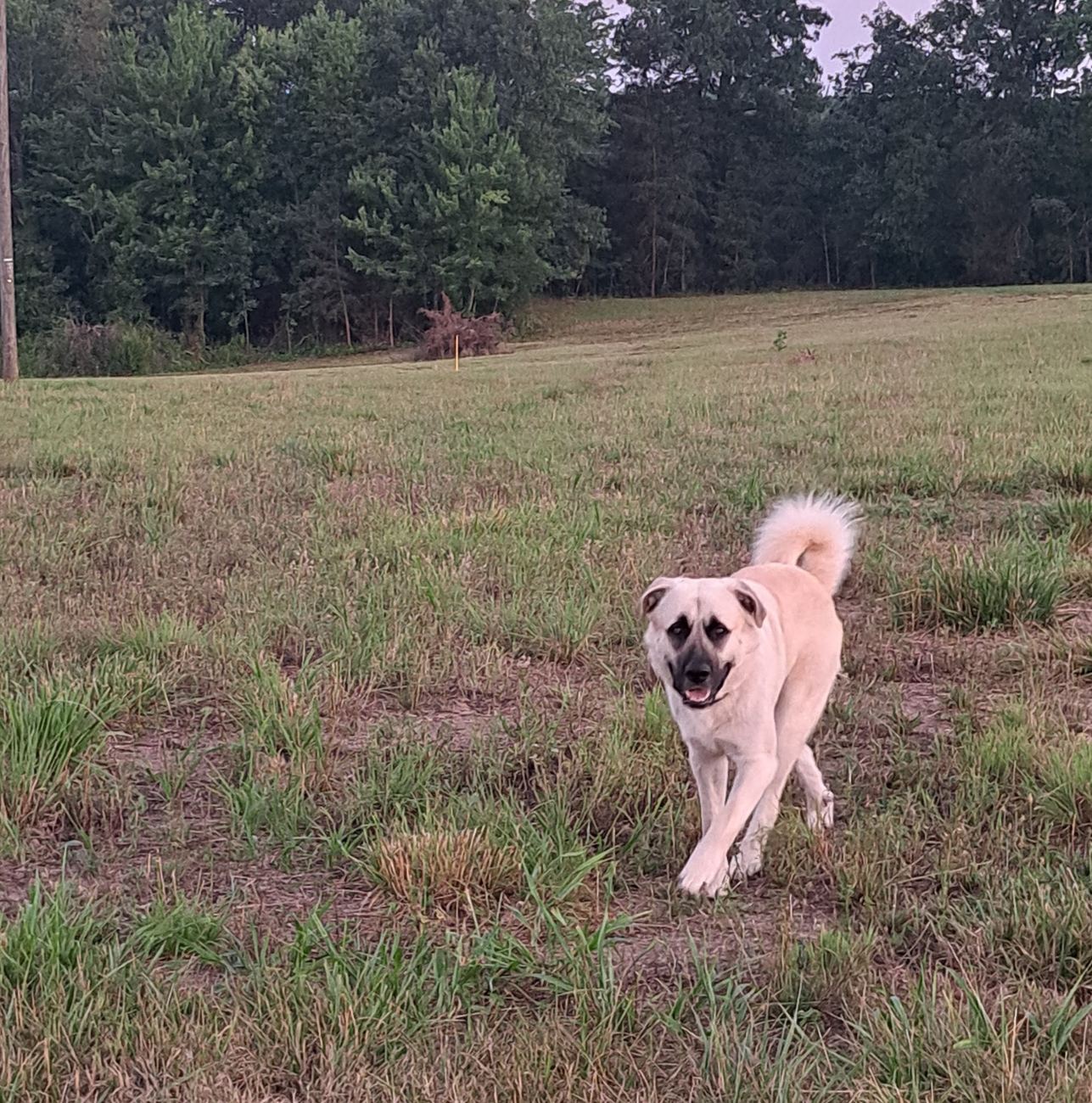
The first week, Junior chased chickens. The second week, he discovered the pond and came out green along one side. He barked at a feed sack, stole one of the farmer's gloves, and wasted time trying to persuade a ewe to play with him. The ewe lowered her head. Junior reconsidered.
Buster watched all this without much hope for Junior. Still, he began taking the youngster with him, and little by little he had Junior out working the field with him, even if the youngster's heart wasn't quite in it yet. Not like Buster's. Nothing was quite like Buster's.
There were lessons Junior did not know were lessons. Buster showed him the gap beneath the sycamore where a coyote might flatten itself and crawl. He showed him that a hawk's shadow mattered more than the hawk's cry. He showed him how to move through the flock without scattering it, how to lie still near a ewe in labor, and how to listen when the night seemed empty.
Over the next months, Junior learned unevenly. He could find the sycamore gap but might forget why he was there if a rabbit ran past. He learned not to crowd a newborn lamb, though his whole body trembled with the desire to sniff it. He learned that Buster's smallest growl meant stop, and that one sharp bark meant come now. What he did not yet understand was why Buster watched when there was nothing to see.
One evening Junior found him on the rise above the lower pasture, facing the dark line of trees. Nothing moved. The sheep grazed behind them. The air smelled of rain. Junior dropped a stick at Buster's feet. Buster looked at the stick, then at Junior, then back toward the trees. Junior lay down with a sigh. After a while, without knowing why, he looked toward the trees too.
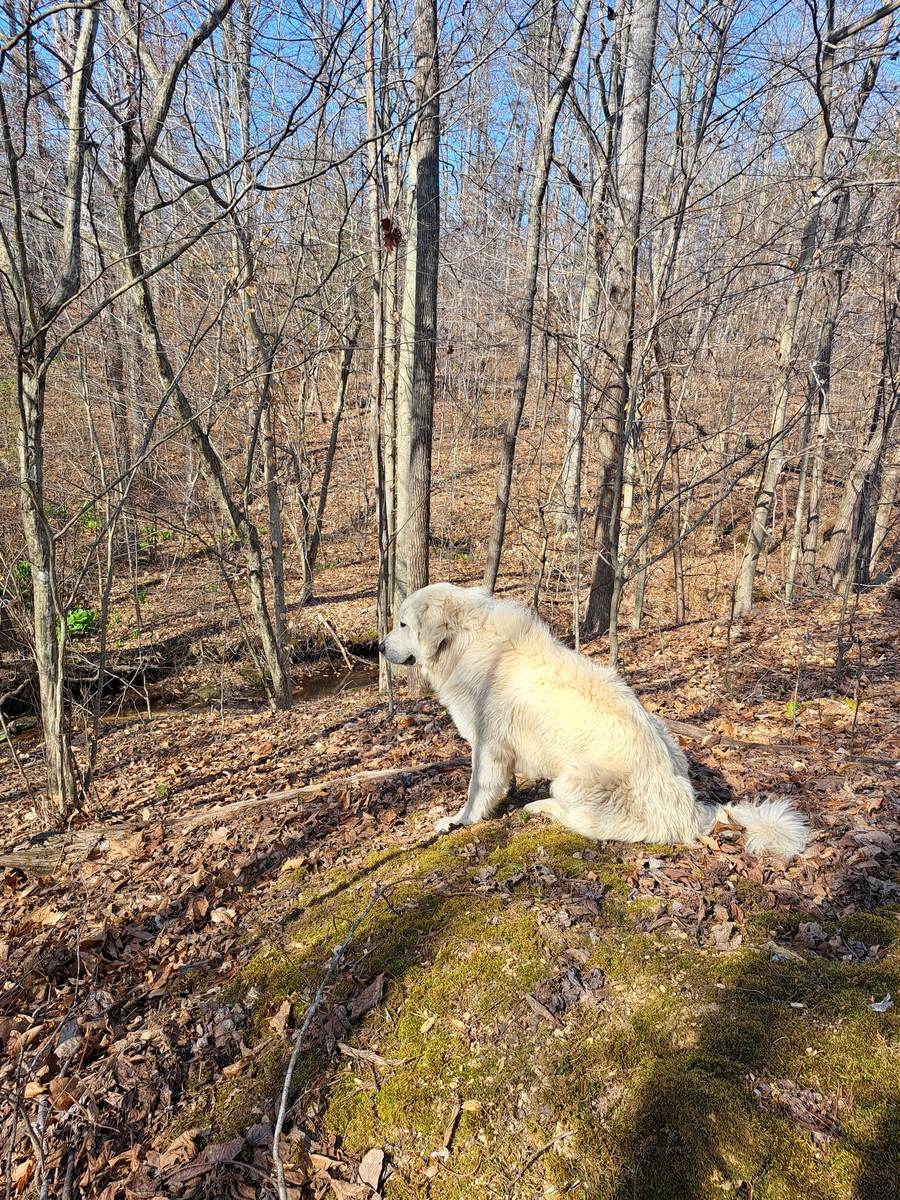
Winter came early. The ground hardened, and Buster's legs troubled him more. Some nights Junior slept in the doghouse while Buster remained outside where he could see the flock. The farmer put fresh straw under the lean-to and hung an old horse blanket across one side to cut the wind.
"Let the boy take a shift," the farmer told Buster. "That's what he's here for."
Buster understood the words. He did not yet trust the fact.
The scar-faced coyote returned on a moonless night in December. This time he brought two friends. They came from downwind and crossed the creek where the water covered their scent. The sheep knew before the dogs did. They rose all at once, a soft upheaval in the dark. Junior lifted his head beneath the lean-to and saw three shapes moving along the lower fence. He heard the first ewe cry out and was running before he had finished waking.
He did not wait for Buster or give the warning bark he had been taught. He ran.
Buster woke to the empty place beside him. He knew where the sheep were bunched, and he knew from the shape of their fear where the trouble had come in. He knew, too, that the young dog had gone there alone. He got his front feet beneath him. His hips did not answer. Then they did.
He was halfway down the slope when he heard Junior. It was not a fighting sound. It was the sound a young thing makes when the world turns out to be heavier than it looked. Junior was alone beyond the fence with all three coyotes closing around him.
Junior held his ground against a large male, snapping and lunging whenever it came near. He did not see the scar-faced coyote rush him from the side. It struck him across the ribs and knocked him flat. Before he could rise, the third seized his shoulder and dragged him onto his side.
The fence stood thirty inches high at the low place. Buster had jumped it a thousand times. But not since the summer he turned nine. He had to get to Junior. In the half second before he gathered himself, he understood exactly what the jump would cost. He cleared it and drove into the coyotes. He tore one coyote from Junior's shoulder, then turned and met the scar-faced male before it could reach the young dog's throat. Buster placed himself over Junior, his legs braced on either side of him.
Teeth closed on Buster's shoulder and flank. Once beneath the jaw. Deep. The taste of blood filled his mouth. Still he fought. Whenever one of the coyotes circled toward Junior, Buster met it. Whenever Junior tried to rise and fell, Buster drove them back again. He did not slow, and he did not give ground.
At last Junior got his feet beneath him. He stood, shaking and bloodied, but free. Only then did Buster stop advancing. The two dogs faced the coyotes together. The younger pair withdrew first, and the scar-faced male followed them toward the creek. Buster watched until all three disappeared into the trees. He stood with his head down and his sides working. Blood ran through the white fur beneath his jaw, faster than it should have.
He turned toward the fence. He understood that he would not be going over it again.
Then his legs folded. Junior turned and saw him lying still on his side, and the night was very loud with sheep. That was the moment Junior became afraid. He raced back. Junior nosed at his face. Buster breathed, but each breath seemed to catch on something. Junior licked the blood from his eyes. He whined. He pushed his nose beneath Buster's shoulder as if he might lift him by wanting to.
Buster opened one eye.
Junior ran to the house.
He barked at the porch, then at the farmer's bedroom window. Pip answered from inside, furious at the disturbance. When the farmer opened the door, Junior turned back toward the pasture, glancing back to be sure the farmer was following.
He found Buster near the lower fence. He knelt, put one hand beneath the old dog's head, and said his name only once.
He carried him to the house in a wheelbarrow lined with the horse blanket. Junior followed so closely that his nose touched the wheel.
In the kitchen, the farmer washed the wounds with warm water. He called the veterinarian, then called again when no one answered. Pip watched from beneath the table, silent now. Buster lay on an old quilt near the stove while the clock moved through the hours after midnight.
The warmth should have comforted him. It did not.
The kitchen smelled of soap, coffee, cooked meat, and all the sheltered lives that had gone on while he kept watch outside. Rain ticked against the window. The flock was beyond the walls, beyond the yard, beyond his knowing.
Junior lay beside him, awake.
Near three in the morning, the farmer dozed in a chair. Buster raised his head. He hated being inside. This could not be where it would end for him.
He rested. Tried again. Got his front feet under him.
Junior stood at once. Pip raised his head.
Buster crossed the kitchen slowly. At the door he stopped, and Junior nosed it open where the latch had never caught properly. Cold air entered the room.
Together they went across the yard.
The farmer woke when the door tapped shut. He saw the empty quilt and started to rise. Then, through the window, he saw the dogs moving toward the barn — the old one leaning, the young one matching his pace. Pip was leading.
The farmer sat back down. There are times when love means carrying something home. There are other times when it means letting it choose where home is. Buster reached the lean-to and stepped into the doghouse the farmer had built almost thirteen years before. Junior went in after him, then Pip. It was crowded with three of them there, but Junior curled along Buster's back and laid his chin across the old dog's paws. Pip lay against Buster's snout. For the first time, Buster did not listen alone.
He could hear the sheep settling. He could smell the wet earth, the cedar shavings, the fading trail of the coyotes headed north. Beside him was the quick, steady breathing of the young dog.
Buster slept.
In the gray before sunrise, the flock moved down the hill as it always did. A ewe approached the lean-to and stood near the doorway. Junior woke when her nose touched his paw. The space beside him had gone quiet.
The farmer came from the house without his coat. He knelt in the straw and put a hand on Buster's head. Junior watched him, waiting for the old dog to rise because the farmer was there. But the farmer only bowed his head.
Pip sat in the doorway, shivering, and made a small sound no one had heard from him before.
They buried Buster on the rise above the lower pasture. The farmer chose the place because Buster had chosen it a thousand times himself. He wrapped him in the horse blanket and placed his worn leather collar on top before filling the grave.
Junior watched from several yards away. Pip stood with him.
That evening Junior searched the farm. He checked the barn, the pond, the sycamore gap, and the low place in the fence. He went to the rise where Buster was and sniffed the turned earth. Then he returned to the lean-to and stood before the empty doghouse.
The farmer had put in fresh cedar shavings. Junior did not go inside.
Out in the pasture, the sheep had begun to bunch together. Beyond them, at the tree line, something moved.
Junior lifted his head.
He walked past the doghouse and out through the gate. At the top of the rise he stopped where Buster used to stop, not because he understood everything yet, but because the flock was behind him and the woods had gone dark ahead.
For a while, nothing happened. The wind came down from the trees carrying the smell of rain, sheep, mud, and something else he could not yet name.
Junior stood watching anyway.